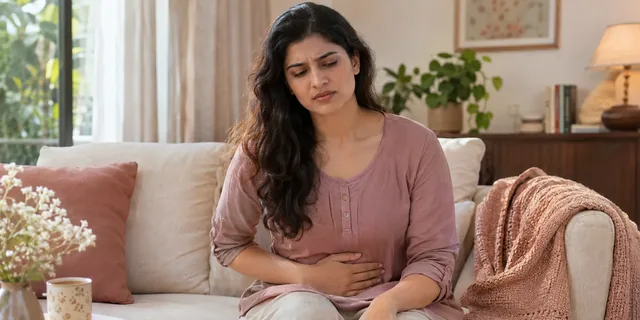
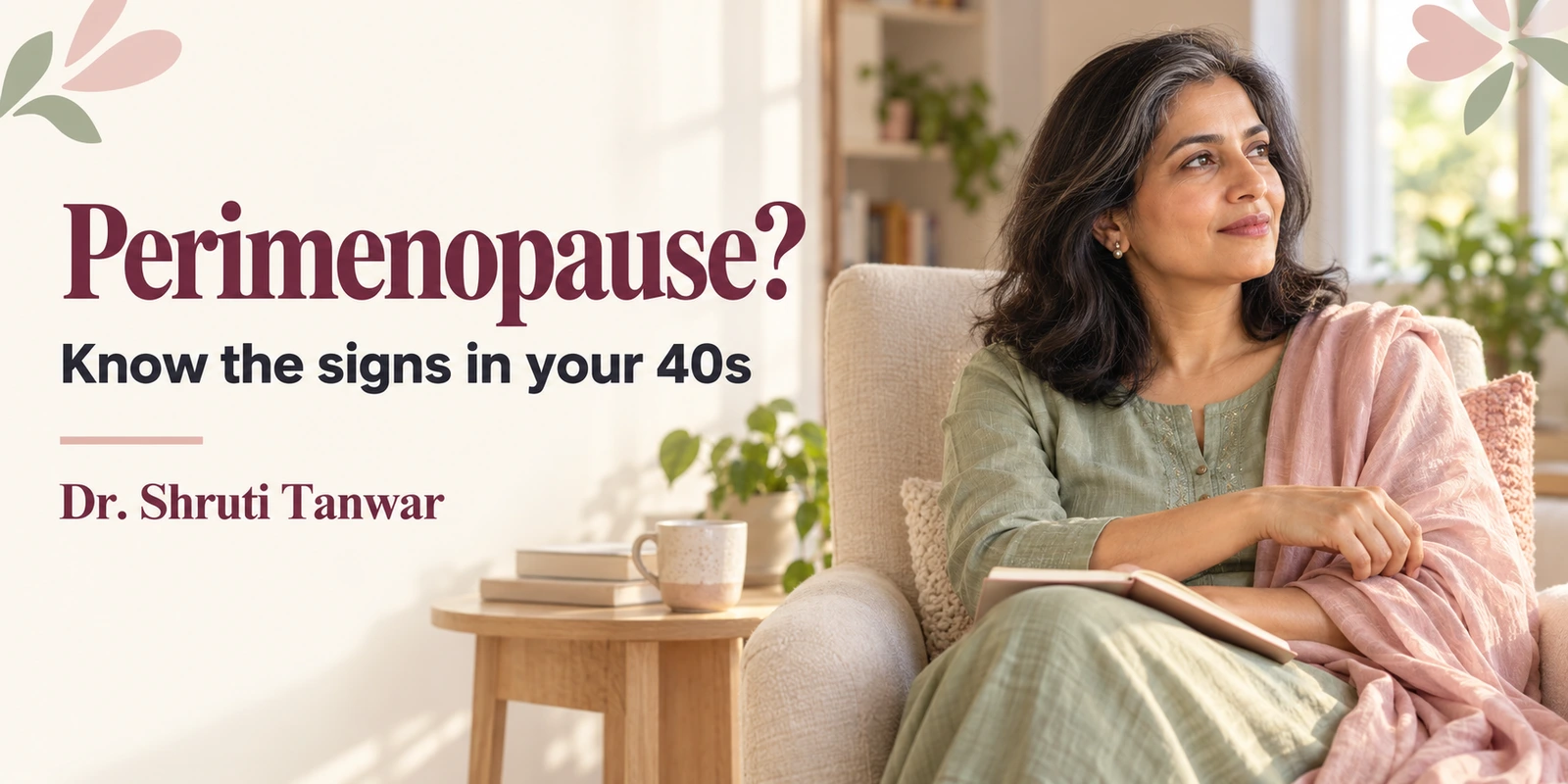
Could these changes be perimenopause? Quite possibly. In your 40s, changing periods, disturbed sleep, night sweats, mood swings and new aches are possible signs of perimenopause - the natural transition towards menopause. These changes have other possible causes too. A gynaecologist assesses your age, period pattern and symptoms, with tests when needed, and can discuss ways to help.
Perimenopause is not an illness, but nor is it something to quietly endure. Some women barely notice it; for others it disrupts sleep, work and relationships for years. This guide explains what perimenopause is, which symptoms commonly appear in your 40s - including the joint and muscle aches especially common among Indian women - which tests actually help, and when to see a gynaecologist.
Sources: NHS: Menopause and perimenopause - symptoms (opens in a new tab) · Indian Menopause Society 2026: Clinical Practice Guidelines for Menopause (opens in a new tab)
When to get help: the short version
- Book an appointment if symptoms are affecting your daily life, your periods have changed noticeably, or you are under 45 and your periods have become infrequent or stopped.
- See a doctor promptly for any bleeding after 12 months without a period - even one episode of light spotting - and for bleeding that has become much heavier or happens between periods or after sex.
- Get advice the same day for a hot, swollen, painful joint, especially with fever, or bleeding that soaks protection every hour for several hours.
- Get emergency help now for heavy bleeding with fainting, severe dizziness, breathlessness or chest pain. See the full list.
Sources: NHS: Postmenopausal bleeding (opens in a new tab) · NHS: Joint pain (opens in a new tab) · MedlinePlus: Vaginal or uterine bleeding (opens in a new tab) · ACOG: Abnormal uterine bleeding (opens in a new tab)
What is perimenopause, and how is it different from menopause?
Menopause is a point in time, recognised only in hindsight: natural menopause is diagnosed after 12 consecutive months without a period, once other causes have been considered. Perimenopause is the transition that leads up to it - the months to years when the ovaries gradually make less oestrogen, hormone levels swing, and symptoms appear - and it includes the first year after the final period.
The transition typically lasts around four years, though for some women it is shorter and for others much longer. Menopause usually happens between 45 and 55; in India, the average age of natural menopause is estimated at around 46.6 years - a population-level approximation, not a personal deadline - so symptoms beginning in your early-to-mid 40s are common.
Two caveats matter. Hormonal contraception can change or stop bleeding, so the 12-month rule is harder to apply and the diagnosis rests more on age and symptoms. Periods can also stop for other reasons, from thyroid problems to pregnancy itself - if a late period has you reaching for a test, our guide to a late period with a negative pregnancy test explains what to check. And menopause can arrive abruptly after surgery that removes the ovaries, or after some chemotherapy or radiotherapy; that situation always deserves specialist support.
Sources: Indian Menopause Society 2026: Clinical Practice Guidelines for Menopause (opens in a new tab) · NHS: Menopause and perimenopause - symptoms (opens in a new tab) · NHS: Early or premature menopause (opens in a new tab)
Which symptoms can appear in your 40s?
Falling and fluctuating oestrogen affects many body systems, so symptoms cluster into recognisable groups. The table below is educational, not a diagnostic checklist: you may notice some of these changes, none is unique to perimenopause, and a symptom list cannot replace an assessment.
| What can change | How it can feel |
|---|---|
| Periods | Cycles become shorter, longer or unpredictable; bleeding turns heavier or lighter. Often one of the first signs. |
| Hot flushes & night sweats | Sudden waves of heat in the face, neck and chest, sometimes with sweating, a racing heart or anxiety, day or night. |
| Sleep | Difficulty falling or staying asleep, often worse with night sweats, leaving you tired and irritable by day. |
| Mood, memory & concentration | Mood swings, low mood or anxiety; forgetfulness and “brain fog”, often amplified by broken sleep. |
| Vaginal & urinary changes | Vaginal dryness or discomfort, sex becoming painful, needing to pass urine more often or urine infections. |
| Muscles & joints | New aches and stiffness in muscles and joints, covered in its own section below. |
| Other changes | Palpitations, headaches or migraines that feel worse than usual, drier skin, hair thinning, reduced sex drive. |
Symptoms come and go and change over time - hot flushes may ease while mood changes or aches take their place. On average they last several years, and some, such as vaginal dryness and joint aches, can continue after menopause. Symptoms that disrupt your life deserve treatment, not endurance - and because tiredness, palpitations, memory changes and aches all have other possible causes, tell a doctor about them rather than filing everything under menopause.
Sources: NHS: Menopause and perimenopause - symptoms (opens in a new tab) · Indian Menopause Society 2026: Clinical Practice Guidelines for Menopause (opens in a new tab)
Can perimenopause cause joint pain?
Yes, it can. Aching muscles and joints are a recognised menopausal symptom, because falling oestrogen levels affect joints and muscles too. This matters particularly in India: studies summarised in the Indian Menopause Society's 2026 guideline report that somatic complaints such as joint and muscle pain are the predominant menopausal symptoms in Asian populations, including Indian women - often more troublesome than hot flushes.
But perimenopause never gets the last word on a painful joint. New, persistent or worsening joint pain still needs assessment, because this is also the age when osteoarthritis, inflammatory arthritis, gout and other treatable conditions appear. A doctor diagnoses these from your story, examination and selected tests - not from a symptom list.
Two honest limits are worth knowing. No blood test proves a joint ache is hormonal. And hormone replacement therapy is not a reliable treatment for isolated joint pain - guidance describes its effect on musculoskeletal symptoms alone as limited and inconsistent. What helps most women is staying active, strength exercise, weight management and physiotherapy where needed, with simple pain relief your doctor or pharmacist agrees is safe for you.
One situation is urgent: a joint that is hot and swollen, or joint pain with fever or feeling generally unwell, needs medical advice the same day, because it can signal a joint infection.
Sources: NHS: Joint pain (opens in a new tab) · Indian Menopause Society 2026: Clinical Practice Guidelines for Menopause (opens in a new tab)
Do I need blood tests to know?
Often not. In otherwise healthy women aged 45 or over with typical symptoms, perimenopause and menopause are usually clinical diagnoses - made from your age, your period pattern and your symptoms. The Indian Menopause Society's 2026 guideline explicitly does not recommend hormone tests such as FSH, oestradiol or AMH for diagnosing natural menopause, reserving them for special situations such as suspected premature ovarian insufficiency or an uncertain menstrual history.
The reason is practical: during the transition, hormone levels swing from month to month, so a single "normal" result cannot rule perimenopause out. A routine hormone or AMH panel for every woman with symptoms adds cost, not clarity.
Age changes this. If your periods become infrequent or stop before 45, blood tests may genuinely help, and before 40 a careful assessment for premature ovarian insufficiency matters. Missed periods alone do not establish early menopause or ovarian insufficiency. After a confirmed diagnosis, hormone replacement is often advised for long-term health unless unsuitable for your medical history. A doctor may also test for other explanations, such as thyroid problems, pregnancy or anaemia, guided by your story rather than a fixed panel.
Sources: Indian Menopause Society 2026: Clinical Practice Guidelines for Menopause (opens in a new tab) · NHS: Early or premature menopause (opens in a new tab)
When should I see a gynaecologist?
Book an appointment
- Flushes, poor sleep, mood changes or aches are affecting your work, relationships or daily life.
- Your periods have changed noticeably - closer together, further apart, or heavier than before.
- Vaginal dryness, discomfort during sex or urinary symptoms are bothering you.
- You are under 45 and your periods have become infrequent or stopped.
You do not need to wait for symptoms to become severe: anything that disrupts your life is reason enough to seek care, not “just ageing” to be endured.
See a doctor promptly
- Any vaginal bleeding after 12 months without a period - even light spotting, even once. It is usually not serious, but it can occasionally signal cancer of the womb lining, which is easier to treat when found early.
- Bleeding that has become much heavier, floods through protection or comes with large clots.
- Bleeding between periods or after sex, which needs its own assessment.
- Low mood that keeps deepening, or memory problems that are steadily worsening.
A changed bleeding pattern should be assessed, not put down to hormones.
Get medical advice the same day
- A joint that is painful with hot, swollen skin around it.
- Joint pain while you feel generally unwell, feverish or shivery - this can signal a joint infection.
- Bleeding that soaks through a pad or tampon every hour for 2 to 3 hours in a row, even if you otherwise feel well.
Do not wait for a numerical bleeding threshold if you feel unwell; use the emergency advice below.
Get emergency help now
- Heavy bleeding with fainting, feeling close to fainting, severe dizziness, breathlessness or chest pain.
Go to the nearest emergency department. Do not wait for a routine appointment or another cycle of tracking.
Heavy or flooding periods are common in the years before menopause and are treatable in their own right - our guide to heavy periods covers the signs, causes and full urgent-help list.
Sources: NHS: Postmenopausal bleeding (opens in a new tab) · NHS: Joint pain (opens in a new tab) · MedlinePlus: Vaginal or uterine bleeding (opens in a new tab) · ACOG: Abnormal uterine bleeding (opens in a new tab)
What can help?
Plenty - and treatment is a shared, individual decision, not a fixed menu. Options a gynaecologist may discuss include:
Everyday foundations
Regular exercise including strength work, steady sleep habits, a balanced diet, weight management, and limiting alcohol and smoking are first-line advice in Indian guidance - together they help flushes, sleep, mood, aches and long-term bone and heart health.
Psychological support
Cognitive behavioural therapy (CBT) has good evidence for hot flushes, night sweats and sleep problems, and CBT for insomnia is the first-line treatment for persistent sleep difficulty. Low mood or anxiety at this stage is real and treatable, with support, talking therapy or medicines all having a place.
Hormonal and non-hormonal medicines
Hormone replacement therapy (HRT) is the most effective treatment for hot flushes and night sweats and can help several other symptoms. When using systemic oestrogen (treatment that acts throughout the body), women who still have a womb usually need a progestogen to protect the womb lining. Low-dose vaginal oestrogen treats dryness and related symptoms locally and does not usually require an additional progestogen when used on its own. Whether HRT suits you depends on your individual history, so it is a decision to make with your doctor - this guide deliberately gives no regimens or doses. For women who cannot or prefer not to use hormones, prescription non-hormonal medicines can reduce flushes and help mood and sleep. Be cautious with herbal products marketed for menopause: evidence on how well they work and how safe they are is very limited, and some interact with other medicines. No "hormone balancing" package or detox is part of evidence-based care. Read more about perimenopause and menopause care.
Sources: Indian Menopause Society 2026: Clinical Practice Guidelines for Menopause (opens in a new tab) · NHS: Menopause and perimenopause - treatment (opens in a new tab) · NHS: About hormone replacement therapy (HRT) (opens in a new tab) · NHS: About vaginal oestrogen (opens in a new tab)
What should I track before a consultation?
A few weeks of simple notes make the consultation sharper, because your own record beats memory:
- 1Your period dates. When each period started and ended over the last few months, and how the flow compared with your usual pattern.
- 2Your main symptoms. Hot flushes, night sweats, sleep, mood, aches - roughly how often they come and how severe they feel.
- 3The effect on your life. Days of work affected, broken nights a week, activities you now avoid. This shapes treatment more than any number.
- 4Your medicines and contraception. Everything you take, including supplements and hormonal contraception, which can itself change bleeding patterns.
- 5Your relevant history. Operations, major illnesses, and any family history of early menopause, osteoporosis, blood clots or breast cancer.
One caveat: tracking is preparation, not a waiting room. If something on the prompt-help list above applies - postmenopausal bleeding, a hot swollen joint, very heavy bleeding - seek care now rather than recording another cycle first.
Sources: NHS: Menopause and perimenopause - symptoms (opens in a new tab) · Indian Menopause Society 2026: Clinical Practice Guidelines for Menopause (opens in a new tab)
Frequently asked questions
Can my periods still be regular in perimenopause?
Yes, especially early on. A changing cycle is often one of the first signs, but poor sleep, night sweats or mood changes can begin while periods are still fairly regular. Do not wait for a textbook cycle change before asking for advice.
Can symptoms start before 40?
They can, and symptoms or missed periods before 40 deserve assessment for premature ovarian insufficiency and other possible causes. Confirmed menopause between 40 and 44 is called early menopause. Missing periods alone does not establish either diagnosis. Hormone replacement is often recommended after a confirmed diagnosis, unless unsuitable for your medical history.
Does a normal hormone test rule out perimenopause?
No. Hormone levels swing from month to month during the transition, so a single normal FSH or oestrogen result cannot rule perimenopause out, and guidelines do not recommend hormone tests to diagnose natural menopause at the usual age. The diagnosis rests on your age, periods and symptoms.
Can I still get pregnant during perimenopause?
Yes. Ovulation and pregnancy can still occur during the transition, and HRT is not contraception. When contraception can be stopped depends on your age, method and menstrual history. Hormonal contraception can mask your natural cycle, so ask your clinician before stopping it.
Does everyone need HRT?
No. Treatment depends on your symptoms, preferences and medical history. HRT is effective for hot flushes and night sweats, while other approaches may suit some people better. Confirmed early menopause or premature ovarian insufficiency needs a separate discussion about replacing hormones and long-term health, unless hormone treatment is unsuitable.
Should I ignore joint aches as just menopause?
No. Falling oestrogen can cause aching joints, but new, persistent or worsening pain deserves assessment, because arthritis and other treatable causes are common at this age. A hot, swollen joint, especially with fever or feeling unwell, needs medical advice the same day.
Sources: NHS: Menopause and perimenopause - symptoms (opens in a new tab) · NHS: About hormone replacement therapy (HRT) (opens in a new tab) · NHS: Early or premature menopause (opens in a new tab) · Indian Menopause Society 2026: Clinical Practice Guidelines for Menopause (opens in a new tab)
The bottom line
Perimenopause in your 40s is common, highly individual and very treatable. Changing periods, poor sleep and new aches are worth understanding rather than enduring - and a changed bleeding pattern, bleeding after menopause or a hot swollen joint should always be checked rather than blamed on hormones. Browse more women's health guides.
This article is for general information and education only. It is not a substitute for a personal consultation, diagnosis or treatment from a qualified doctor who knows your individual history.
Wondering whether this is perimenopause?
Discuss your periods, sleep, aches and options in an unhurried consultation with Dr. Shruti Tanwar, Consultant Obstetrician & Gynaecologist, at Niravta Hospital, Sector 88A, Gurugram (Gurgaon).
Main references
Sources checked on 30 October 2026. Further sources are linked beside each section. Links open in a new tab.
- Indian Menopause Society 2026: Clinical Practice Guidelines for Menopause (opens in a new tab)
- NHS: Menopause and perimenopause - symptoms (opens in a new tab)
- NHS: Menopause and perimenopause - treatment (opens in a new tab)
- NHS: Postmenopausal bleeding (opens in a new tab)
- NHS: Joint pain (opens in a new tab)
- NHS: Early or premature menopause (opens in a new tab)
- NHS: About hormone replacement therapy (HRT) (opens in a new tab)
- NHS: About vaginal oestrogen (opens in a new tab)
- MedlinePlus: Vaginal or uterine bleeding (opens in a new tab)
- ACOG: Abnormal uterine bleeding (opens in a new tab)