

PCOS is manageable. There is no overnight cure and no single lifestyle prescription. What helps is combining your prescribed treatment with food, movement and sleep habits you can keep up. This guide from Dr. Shruti Tanwar is a starting point; your own plan is adjusted to your symptoms, goals and health.
PCOS now also has a new international name, PMOS. It is the same condition, and this guide uses the familiar name. For symptoms and diagnosis, read irregular periods, acne and facial hair: could it be PCOS?
1. Your daily routine
No special PCOS food, supplement or fasting schedule is needed. Any balanced way of eating that you enjoy and can sustain will help.
A balanced plate
About half
Non-starchy vegetables
Sabzi, salad, cooked greens, lauki, bhindi, beans.
About a quarter
A protein source
Dal, paneer, curd, eggs, beans, sprouts, tofu, fish or chicken.
About a quarter
High-fibre carbohydrate
Whole-grain roti, millets, brown rice, oats.
Optional
A little healthy fat
A few nuts or seeds, or the oil used in cooking.
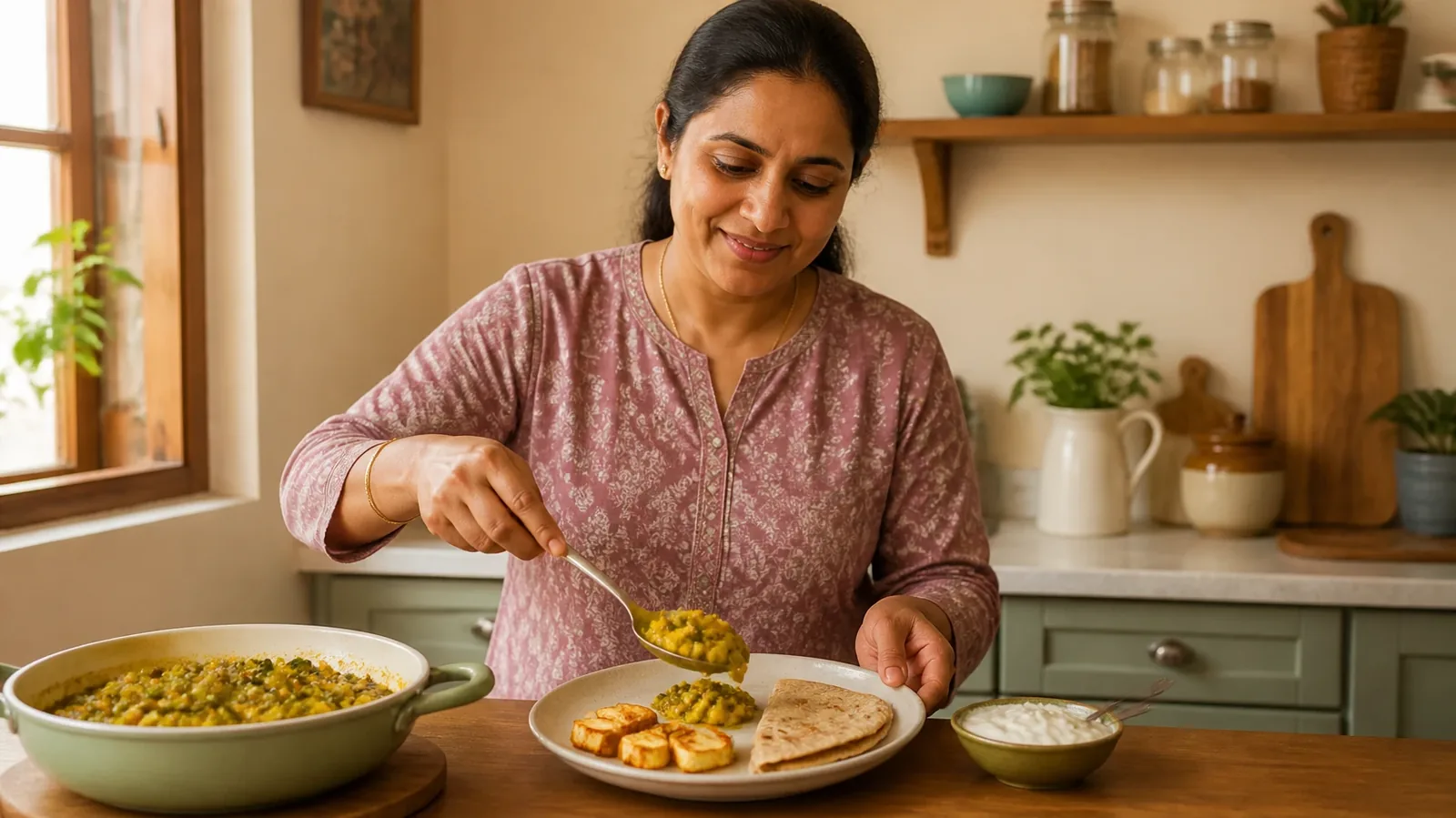
For example: sabzi, dal or paneer, a whole-grain roti and plain curd. The proportions are a flexible guide, not a rule. Adjust them to your hunger, your activity and the food your family eats.
Through the day
- Morning. Wake at a similar time each day and drink water when you are thirsty. If breakfast suits you, include protein and fibre: eggs, paneer or curd with vegetables and a whole-grain roti, or oats with nuts, seeds and unsweetened curd.
- Meals. Use the plate above as a guide. Choose a meal pattern you can keep up. Regular meals are fine, and fasting is not required for PCOS.
- Swap, don’t starve. Have sugary drinks, sweets, biscuits and packaged snacks less often, without cutting out whole food groups. Avoid crash diets.
- Movement. Pick activity you enjoy: brisk walking, cycling, swimming, dancing or yoga. A short walk after a meal is an easy optional way to add some.
- Sitting. Break up long spells of sitting with a few minutes of standing, stretching or walking.
- Sleep. Keep a regular bedtime and wake time. Most adults need around 7 to 9 hours. If screens keep you awake, put them away a little earlier.
- Unwinding. Give yourself a few minutes a day for something calming: breathing exercises, yoga, prayer, music, a hobby or time outdoors.
Talk to your doctor
Please mention loud snoring with daytime sleepiness, trouble sleeping that does not settle, or ongoing anxiety, low mood or distress about food or your body. Sleep apnoea, anxiety and low mood are more common with PCOS, and all of them can be helped.
2. Your weekly checklist
This week I aimed for
Ticks stay on your screen only. They are not saved or sent anywhere. For a paper copy, use your browser's Print option.
Start where you are. These are targets to build towards gradually, not a test. Some activity is better than none, and a few ticks in a week is real progress. The activity figures are for adults aged 18 to 64.
Your plan may differ. Ask before following these targets if you are pregnant, under 18, recovering from an injury, living with another medical condition, or have had an eating disorder.
3. Your treatment plan
- Take prescribed medicines as advised. Follow the timing and instructions you were given, and keep taking them unless you are told to stop.
- Do not start, stop or change anything on your own. That includes medicines and supplements. If something is not suiting you, or you are planning a pregnancy, speak to your doctor first.
- Mention every supplement you take. Including ones bought online or recommended by family or friends.
- Habits and treatment work together. The routine on this page supports your treatment. It does not replace it.
About myo-inositol. It is widely sold for PCOS. The international guideline says it can be considered if you wish, as known harms appear limited, but the evidence for benefit to ovulation, unwanted hair or weight is limited, and it is not recommended as a fertility treatment. No particular type, dose or combination can be recommended, and product quality varies. Discuss it with your doctor before starting.
4. Before your next visit
A few notes make your follow-up far more useful. Keep them in a notebook or on your phone, and bring them along:
- Period dates. The first day of each period, and how long it lasted.
- Symptoms. Any changes in acne, hair, mood, energy or anything else you have noticed.
- Sleep and activity. Roughly how you have been sleeping and moving. A rough pattern is enough.
- Current treatment. The medicines and supplements you are taking, and any side effects.
- Questions and goals. The two or three things that matter most to you right now.
These notes are for you. This page does not collect or store any of your details.
Remember
PCOS care is not about perfection or a particular body size. Healthy habits support your metabolic health and wellbeing at every size, even when weight does not change. Skip crash diets, punishing exercise and guilt about food.
Questions about your plan? Dr. Shruti Tanwar sees patients at Niravta Hospital, Sector 88A, Gurugram.
Know someone who would find this useful? Share this guide on WhatsApp (opens in a new tab).
Sources
Adapted from the PCOS handouts given at Dr. Shruti Tanwar's clinic and checked against the 2023 international guideline on 12 November 2026. The plate proportions are a common teaching example, not a guideline requirement. Links open in a new tab.
- Recommendations from the 2023 International Evidence-based Guideline for the Assessment and Management of PCOS (Human Reproduction) (opens in a new tab)
- Monash MCHRI: PMOS (formerly PCOS) guideline and resources (opens in a new tab)
- NHS: Insomnia - how much sleep you need (opens in a new tab)
This guide is general patient education. It is not a substitute for advice from a doctor who knows your individual history.