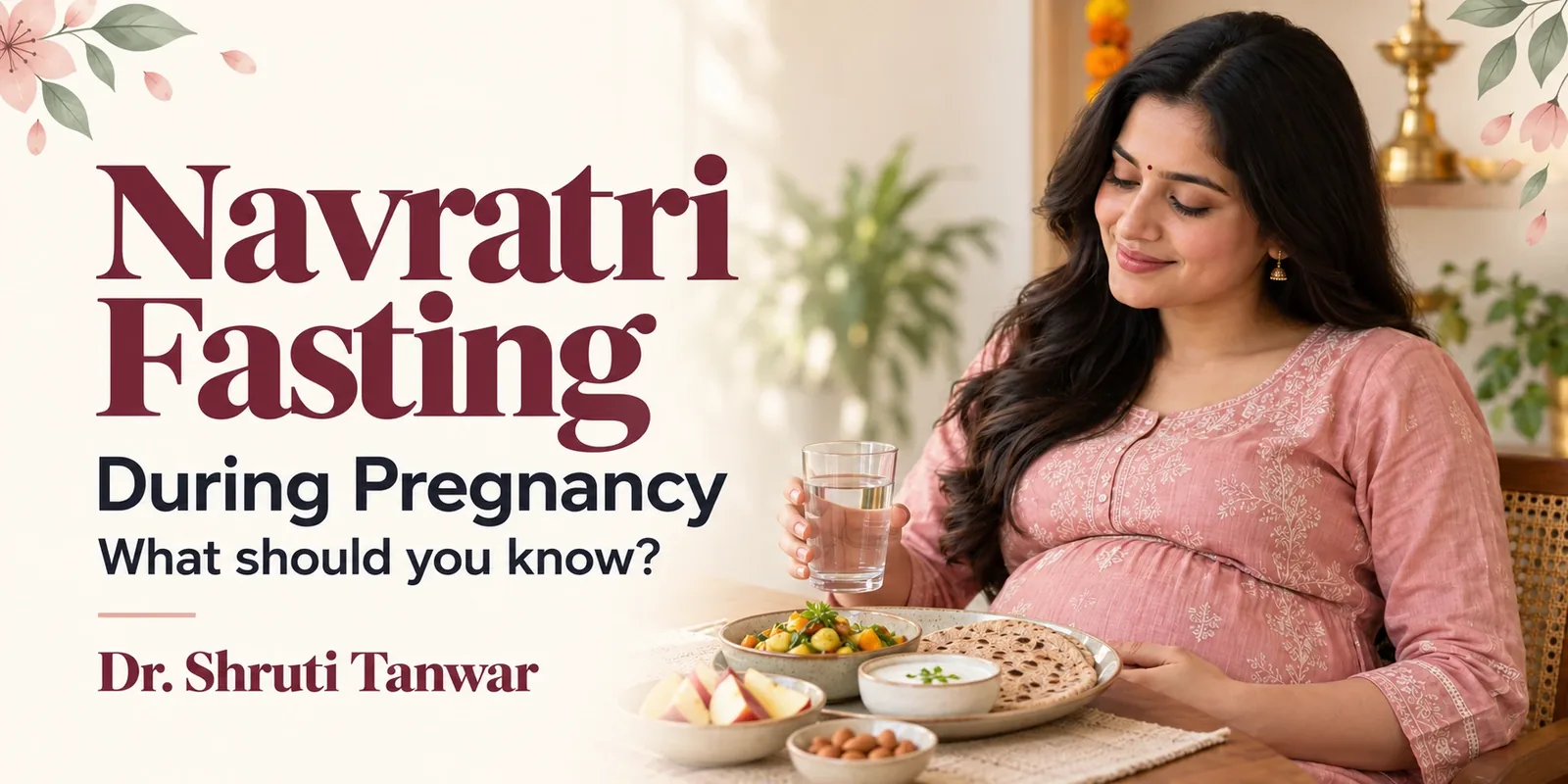
Can you fast during Navratri while pregnant? Pregnancy is a time when your body needs steady nourishment and water, so eating regular, balanced meals is the choice that best protects you and your baby. Fasting is a personal decision and vrat practices vary enormously; if you are considering one, discuss it with your obstetrician first. Even with medical advice, no fast can be promised to be completely safe.
Navratri is one of the most cherished times of the year in many Indian homes: nine days of devotion to the Goddess, prayer, music and family tradition. If you are pregnant, you may feel torn between faith and worry about keeping your usual vrat (fast). A few words used in this guide: a vrat may mean simply avoiding certain foods, a phalahar fast allows fruit and fasting foods like kuttu and sabudana, and a nirjala fast means taking nothing at all, not even water. Here is what each means for pregnancy, who needs extra care, and how to keep the spirit of the festival while staying nourished.
Can pregnant women fast during Navratri?
The two priorities are nutrition and hydration. The UK pregnancy charity Tommy's puts it plainly: not fasting helps protect the health of you and your baby, and anyone who decides to fast should speak to their doctor or midwife first. Your obstetrician will weigh how many weeks pregnant you are, your weight gain, any complications and your energy, then advise whether a particular vrat is reasonable for you and how to soften it. That advice reduces risk; it does not make any fast guaranteed safe.
It also helps to know what research can and cannot say. Most studies of fasting in pregnancy come from Ramadan, and they link prolonged fasting with dehydration and tiredness in mothers, with open questions about other effects. Navratri customs differ in length, in the foods allowed and in whether water is taken, so those findings cannot simply be carried over to Navratri. Each pregnancy needs its own advice.
Sources: Tommy's: Fasting in pregnancy (opens in a new tab)
Not every vrat carries the same concern
"Fasting" during Navratri covers very different practices, and they are not equal in the eyes of a doctor:
- Avoiding selected foods while eating normally. Many families skip grains, onion, garlic or regular salt but eat full phalahar meals with water through the day. This stays closest to a normal balanced diet and is the least concerning pattern, though it still deserves a mention at your antenatal visit.
- Long gaps or a single meal a day. Extended stretches without food can drop your blood sugar, leaving you dizzy and weak. Restricting calories in pregnancy is not recommended, whatever your weight.
- Fruit-only days. Fruit gives quick energy and vitamins but very little protein or iron, so several fruit-only days leave real gaps in what a growing baby needs.
- Nirjala fasting (no food or water). The most concerning form in pregnancy. Your body needs extra fluid to maintain the amniotic fluid and the increased blood supply to the baby, so going without water invites dehydration, overheating, headaches and urinary infections, which are already more common in pregnancy.
Sources: Tommy's: Fasting in pregnancy (opens in a new tab)
Who needs particular caution?
Every pregnant woman considering a fast should take advice first; the situations below simply make that conversation non-negotiable. The reverse is not true either: not being on this list does not automatically make fasting fine for you.
- Gestational diabetes. Long gaps make blood sugar hard to keep steady, especially alongside diabetes medicines or insulin. Most women with gestational diabetes are advised not to fast, and never without their doctor involved.
- Anaemia (low haemoglobin). Anaemia is common in pregnancy, and restricted days cut iron intake just when the body needs more. If you are on iron treatment, do not pause it for a vrat.
- Severe nausea or vomiting. If you struggle to keep food or fluids down, you have no reserve to fast on, and dehydration can set in quickly.
- Slow weight gain or a baby growing slowly. If weight gain is below what your doctor expects, or scans show the baby is small, further restriction is the opposite of what the pregnancy needs.
- Other complications or a high-risk pregnancy. Twins, blood pressure problems, a previous loss or preterm birth, or any pregnancy your doctor is watching closely all call for a conversation before any fast.
Timing matters too. In the first trimester, nausea and tiredness can make even a gentle fast harder than expected, and in the third trimester your body needs roughly 200 extra calories a day, so the margin for restriction keeps shrinking.
Sources: Tommy's: Fasting in pregnancy (opens in a new tab)
Eating well through Navratri
Whether you keep a softened vrat or simply eat sattvik food for nine days, the same principles of a healthy pregnancy diet apply: a variety of foods every day, with protein, fruit and vegetables, and plenty of fluids. There is no single timetable or menu that suits everyone, so treat these as building blocks, not a prescribed plan:
- Eat small, regular meals. Several lighter meals and snacks across the day keep energy and blood sugar steadier than one large meal after a long empty stretch.
- Keep sipping fluids. Water through the day, plus coconut water, nimbu pani or chaas made from pasteurised curd. Go easy on tea and coffee, since caffeine is already limited in pregnancy.
- Get protein into every day. Pasteurised milk, curd and paneer, peanuts, almonds and other nuts, makhana, and rajgira (amaranth), one of the more protein-rich vrat grains.
- Build fuller vrat plates. Well-cooked kuttu (buckwheat) or singhara (water chestnut) rotis or chillas with a vegetable sabzi and curd; samak (barnyard millet) khichdi with peanuts; rajgira porridge with milk and fruit. Adjust to your family’s customs and what you tolerate.
- Mind food hygiene. Wash fruit and vegetables well, use only pasteurised milk and dairy, cook food thoroughly and eat it fresh, and be careful with cut fruit kept out for hours.
One caution about the typical festive plate: sabudana, potatoes, sweets or fruit alone do not add up to a balanced pregnancy diet. They are mostly starch and sugar, so pair them with dairy, nuts and vegetables rather than making a meal of them alone.
Sources: NHS: Have a healthy diet in pregnancy (opens in a new tab) · NHS: Foods to avoid in pregnancy (opens in a new tab) · Tommy's: Fasting in pregnancy (opens in a new tab)
Medicines and supplements
Do not skip, stop or shift any prescribed medicine to fit a fast without asking the doctor who prescribed it. That includes iron and calcium, thyroid, blood pressure and diabetes medicines, and the supplements recommended in pregnancy, such as folic acid (400 micrograms daily until 12 weeks). Many are timed around food, and your clinician can usually adjust the schedule to a fasting day; dropping doses on your own is the one change that is never advised.
Sources: NHS: Vitamins and supplements in pregnancy (opens in a new tab) · Tommy's: Fasting in pregnancy (opens in a new tab)
When to stop fasting and seek help
A vrat should never be pushed through warning signs. Stopping a fast to protect your baby is itself an act of care, not a failure of devotion.
Stop the fast and get advice promptly
- Dizziness, light-headedness or unusual weakness.
- Headache that does not settle after fluids and rest.
- Dark-coloured urine, or passing much less urine than usual.
- Burning or pain when passing urine.
- You cannot keep fluids down.
Break the fast gently with fluids first, then contact your doctor the same day and mention that you have been fasting.
Get urgent maternity help now
- Fainting or near-fainting.
- Any vaginal bleeding.
- Severe or persistent abdominal pain.
- Fever or feeling very unwell.
- Once you know your baby’s usual pattern, any slowing or change from it: contact your maternity unit or obstetrician immediately, at any hour. Do not wait to see if movements return after eating or drinking something.
For an emergency, go to the nearest hospital emergency department or call 112, India’s single emergency number.
Most women first feel their baby move between 16 and 24 weeks. Once the pattern is familiar, movements should continue right up to and during labour, fasting or not, and a home doppler is never a substitute for being checked.
Sources: NHS: Your baby's movements (opens in a new tab) · Tommy's: Fasting in pregnancy (opens in a new tab) · MHA: Emergency Response Support System (112) (opens in a new tab)
Taking part without going hungry
Fasting is one expression of devotion, not the whole of it. Customs differ between families, communities and regions, and many families already adapt them gently for expectant mothers; your own elders or priest can guide you on what feels right in your tradition. Ways to stay at the heart of the festival:
- Joining the daily puja and aarti, and offering the morning and evening prayers.
- Singing or listening to bhajans, and enjoying garba or dandiya evenings at a gentle pace, with rest and water close by.
- Cooking and sharing sattvik meals with the family without restricting your own portions.
- Giving charity, such as food, clothes or a donation, and helping arrange the kanya pujan or family celebrations.
- Keeping a softened vrat agreed with your doctor, such as avoiding grains while eating full phalahar meals with water.
However you observe these nine days, eating during pregnancy is not a lapse in devotion. Nourishing yourself is nourishing the life you are carrying, and no mother should feel guilty for that.
Frequently asked questions
Can I keep a nirjala vrat in early pregnancy?
Going without water is not advised at any stage of pregnancy: your body needs extra fluid to support the baby, and early pregnancy nausea can make dehydration set in faster. If a nirjala fast matters deeply to you, ask your obstetrician about gentler alternatives, such as a phalahar vrat with plenty of fluids.
I have gestational diabetes. Can I fast if I check my sugar levels?
Long gaps without food make blood sugar hard to keep steady and can be risky with diabetes medicines or insulin, so most women with gestational diabetes are advised not to fast; checking sugar levels does not make the gaps themselves safe. Never adjust your medicines or insulin on your own; ask your doctor how to observe Navratri within your treatment.
Is sabudana khichdi enough for a pregnancy fasting day?
Not on its own. Sabudana is mostly starch, so it gives energy but little protein or iron. Add peanuts to the khichdi and have it with curd or a glass of pasteurised milk, plus vegetables and fruit through the day.
What should I do if I feel dizzy while fasting?
Sit or lie down and end the fast gently: fluids first, such as water, coconut water or milk, then a small snack. If it does not settle soon, or you have dark or scanty urine or cannot keep fluids down, contact your doctor the same day. Fainting, bleeding, severe pain or reduced baby movements need urgent maternity care.
The bottom line
Navratri can still be a joyful, spiritually rich time in pregnancy. Keep nutrition and hydration first, treat any fast as a decision to make together with your obstetrician, and let the warning signs above be your cue to stop and be checked. Your devotion is not measured by how strictly you fast. If you are expecting, do bring Navratri up at your next antenatal visit: a short conversation about your health, your trimester and your family's customs can shape a plan that honours both your faith and your baby. Browse more pregnancy guides, or learn about antenatal and pregnancy care.
This article is for general information and education only. It is not a substitute for a personal consultation, diagnosis or treatment from a qualified doctor who knows your individual history.
Planning your Navratri during pregnancy?
Consult Dr. Shruti Tanwar, Consultant Obstetrician & Gynaecologist, at Niravta Hospital, Sector 88A, Gurugram, for advice on fasting, nutrition and antenatal care that fits your pregnancy and your family's traditions.
Main references
Sources checked on 13 October 2026. Further sources are linked beside each section. Links open in a new tab.